
The Strongest Man I Knew
My dad, Dave McIntosh, scored against Celtic on his debut and kept Kenny Dalglish quiet. Dementia is taking him a piece at a time now — and there's no muscle that fights it.
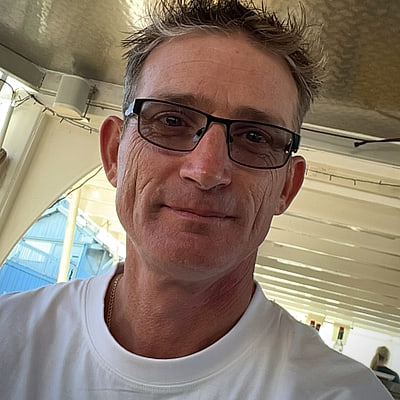 Barry 28 May 2026 6 min read Personal Story
 My father was the strongest man I knew. His name is David McIntosh — Dave — and he was a professional footballer: fast, fearless, the kind of physical presence that fills a doorway and makes a kid feel like nothing bad can ever reach him. He was the protector. The warrior. The one who’d never go down.
He’s seventy now, and dementia is taking him a piece at a time. There’s no muscle that fights it. No training that holds it off. The strongest man I ever knew is slowly being unmade, and all the strength in the world can’t lay a glove on the thing doing it.
The warrior on the pitch
Let me tell you about the man before, because it matters.
Dad came up through the youth ranks at Dundee in Scotland and broke into the first team as a teenager. He made his debut on the 3rd of January 1976, away to Celtic — and he scored, in a 3–3 draw, on that stage, at that age. And it isn’t just family legend: he kept a young Kenny Dalglish — yes, that Kenny Dalglish — so quiet that day he might as well have carried him round in his pocket. It made the papers at the time, and we’ve still got the cuttings. A teenager pocketing Dalglish. I will never, ever get tired of that one — and here’s the beautiful, brutal part: neither will he. Because that, it turns out, is exactly the kind of memory the disease has chosen to leave him.
Then he did what a lot of his generation did: he packed up and came to the other side of the world. He played in the very first seasons of Australia’s National Soccer League — Sydney Olympic, St George, Penrith, Melbourne Croatia — and won a Dockerty Cup along the way. He’d started life as a forward and remade himself into an old-fashioned centre half: the immovable one at the back, all organisation and presence, the bloke you simply did not get past. And he kept going, long after most men hang the boots up — still pulling on a jersey in the state leagues into his thirties and beyond.
That’s the man. A top-flight Scottish footballer who helped build a game in a new country and refused, for decades, to stop. Hold that picture, because it’s what makes the rest of this so hard to write.
The slow signs
It didn’t arrive all at once. Looking back, it started creeping in through his fifties and sixties — small things we explained away. A word that wouldn’t come. A story told twice. A flash of confusion he covered with a joke, the way proud men do. We didn’t want to see it, so for a while we didn’t. By the time it had a name, it had already been living in the house a long time.
What stays, and what goes
It’s his short-term memory the disease has taken. He can’t tell you where he parked the car. In a restaurant we’ve eaten at a dozen times he’ll get up and not find his way back from the toilet, or ask me — gently, a little embarrassed — which town we’re actually in. The last five minutes keep slipping through his fingers like water.
But his long-term memory? Spot on. Crystal. He can take you through that goal against Celtic frame by frame. He could near enough tell you the colour of the socks he wore on his tenth birthday. The man who can’t hold onto the last five minutes can give you 1976 in high definition.
There’s a strange mercy in that, and a strange cruelty folded right into it. The present keeps dissolving in his hands. But the glory days — the pitch, the goals, the whole life he built — those are still his, sharp and intact. If you’ve got to lose one end of your life, maybe that’s the end you’d choose to keep.
Grieving someone who’s still here
Nobody warns you about this particular grief — mourning a person who’s still alive, still in the room with you. You lose them in instalments. A memory here, a habit there, a piece of the man who taught you to throw a ball or stand your ground. Some days he’s mostly himself and you could weep with the relief of it. Other days he looks at you with a half-second of searching before it lands, and that half-second costs you something you don’t get back.
It’s a long goodbye, and you have to keep saying it, over and over, to a person who can’t always tell it’s happening.
The protector needs protecting now
There’s a particular vertigo in the role reversal. The man who carried you, who stood between you and the world, now needs you to stand between him and it. The hands that once felt like they could fix anything need steadying. You become the strong one — for the man who taught you what strong even looked like — and it breaks something in you even as you do it without a second’s hesitation.
The lie we were handed
Here’s where I have to talk about being a man, because it’s threaded all the way through this.
Men like my dad were raised to be warriors. Strong, silent, the protectors. You don’t complain, you don’t crumble, you carry it and you keep moving. And I’ll be honest — there’s something in that I still respect. There’s a real kind of strength there.
But it’s also a lie that costs us everything. Because that same conditioning means a lot of men watch their fathers disappear, or feel their own minds start to fray, and say nothing. We’re not allowed to be frightened. We’re not allowed to grieve out loud. We sit with the worst thing that’s ever happened to us behind a face that says “yeah, good, mate,” because breaking was never in the job description we were handed.
I’ll tell you what I’ve learned standing at the edge of my father’s illness: the warrior thing was always a costume. Real strength was never about never breaking. It’s about loving someone through the breaking — showing up, holding the hand, being tender with a man who can’t always remember your name. There’s more courage in that than in any amount of not-feeling.
What’s left
The disease keeps taking the present, day after day. But I’ve come to believe it can’t reach the deepest things. Underneath the recent stuff it strips away, something holds on — the playing days, yes, but also something simpler and harder to name. He doesn’t always have the details of me anymore. He still knows, somewhere below all of it, that I’m his and that he’s safe with me. I’ll take that. On the hard days I hold onto it with both hands.
He was the strongest man I knew. He still is — just in a way neither of us could have understood back when strength looked like a man who never went down. And if losing him slowly has taught me anything worth passing on, it’s this: talk to the men you love while they can still hear you. Tell your father what he was to you. Don’t wait for a day the disease might take before you ever get to it.
We were raised to be the strong, silent ones. I’ve come to think the silence was the weakness all along.
Dad's playing career — including that afternoon against Celtic — is a matter of public record. The newspaper reports from the time are still in the family's keeping.
Worth reading next

I Don't Look Disabled
I've got the sticker, and the leg to go with it. But because I don't look the part, the car park has opinions — and it took me nearly thirty years to stop having them about myself.

I Trust My Dog More Than Most People
Getting coughed and screamed at across a shop counter changed how I see humans. My dog never once made me feel that way.

Why I Built Do It Better
Not because I have the answers — because I think we need better questions.