
I Don't Look Disabled
I've got the sticker, and the leg to go with it. But because I don't look the part, the car park has opinions — and it took me nearly thirty years to stop having them about myself.
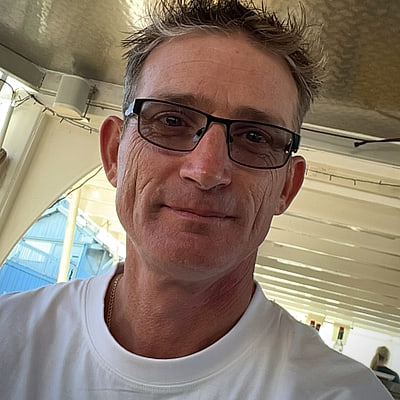 Barry 2 June 2026 4 min read Personal Story
 I pull into a disabled parking spot. I’ve got the permit on the dash. And before I’ve even got out of the car, I can feel it: the looks. Sometimes it’s just a stare. Sometimes someone actually says something. Because I get out and walk, more or less, like anyone else — and to a stranger, that’s all the evidence they need to decide I’m a fraud taking a spot off someone who “really” needs it.
They can’t see the leg. They can’t see thirty years of surgeries, infections, grafts, the bone that nearly came off below the knee. They can’t see what every step costs me by the end of a day, or what standing in a queue does, or why the distance from a far car park to a shop door is a calculation I run before I commit to anything. They see a bloke who looks fine. So they judge.
You can’t see most of what people carry
Here’s the thing I wish I could hand every person who’s ever given me that look: you have no idea what someone else is carrying. None. The permit on my dash went through a doctor and a government department — it isn’t a guess, and it certainly isn’t your call to make from across a car park.
Invisible disability is its own peculiar trap. If you’re in a wheelchair, the world adjusts, mostly. If you limp on a good day but pay for it on the bad ones, you fall through a gap — too disabled to do what everyone else does, not disabled-looking enough to be allowed the help without a side of suspicion. You end up apologising for a thing you didn’t choose, to people who’ll never know the half of it.
I was the worst judge of all
But I have to be honest here, because doing it better starts with me, not them. For a long, long time, the harshest judge in that car park was me.
I didn’t want to be disabled. I didn’t want the sticker, the spot, the label, the look. After the accident I spent years trying to be normal — pushing through, pretending, gritting my teeth and paying for it later, because admitting I was disabled felt like admitting I’d lost. I probably gave a few people that exact suspicious look myself, back when I was still busy denying my own reality.
It took me the best part of thirty years to say the word out loud. Thirty years, and a body that kept getting worse no matter how stubbornly I argued with it, before I’d accept what was true the whole time. That’s not strength. That was pride, and pride cost me a lot of unnecessary pain.
Anger wasn’t the answer either
For a good while, I was angry — at the accident, at the system, at the strangers, at the body that wouldn’t cooperate. And I get it. Anger feels like doing something. It feels like strength when you’re frightened and in pain.
But it isn’t. It just burns you from the inside and leaks out onto people who don’t deserve it. Learning to put it down — not to be a saint, just to stop poisoning my own days with it — was some of the hardest and most important work I’ve done.
So: do it better
This is where it all comes back to the whole point of this place.
Do it better to others: next time you see someone in a disabled spot who looks fine to you, assume the struggle you can’t see. You’ll be right far more often than you’ll be wrong, and on the rare time you’re not, no harm’s done. The opposite — the stare, the comment — lands on a lot of people who are already having a harder day than you know.
And do it better to yourself: if you’re fighting your own reality the way I fought mine, accepting it isn’t surrender. It’s the thing that finally lets you build a life that fits, instead of failing forever at one that doesn’t.
I don’t look disabled. A lot of us don’t. Be kinder than your eyes tell you to be — to other people, and to yourself.
My disability — and the decades-long road to admitting it — is consistent with my own medical records.
Worth reading next

What Pain Taught Me
Living with something that can't be fixed changes how you see almost everything.

Living in a Body That Won't Cooperate
Disability isn't a tragedy or an inspiration. Most days it's just admin.

I Trust My Dog More Than Most People
Getting coughed and screamed at across a shop counter changed how I see humans. My dog never once made me feel that way.